The short answer
You do not need to overhaul your diet or self-prescribe supplements. Start by regularly including varied iron-containing foods, pair plant sources thoughtfully and seek clinical advice if symptoms or heavy bleeding are a concern.
Why iron belongs in a real-life nutrition conversation
Iron helps the body make haemoglobin, the protein in red blood cells that carries oxygen, and myoglobin, which supports oxygen use in muscle. It also contributes to growth, neurological function and hormone production. [1] That makes iron relevant to active women, but relevant does not mean that every dip in energy is an iron problem.
Women aged 19 to 49 are advised to aim for 14.8 mg of iron a day in UK guidance, compared with 8.7 mg for men and women aged 50 and over. Needs vary across life stages, and menstrual blood loss is one reason many women of reproductive age need to pay attention to iron-containing foods. [2] Pregnancy, breastfeeding, dietary pattern, medical history and the amount of menstrual bleeding can all change the picture.
The useful middle ground is not obsessive tracking. It is becoming iron-aware: noticing whether your usual week contains a range of foods that contribute iron, then making small adjustments that fit your household, budget and appetite.
Think in meals, not perfect numbers
Iron arrives in food in two forms. Heme iron is found in meat, poultry and seafood. Non-heme iron is found in plant foods and fortified foods, including beans, lentils, tofu, leafy greens, nuts, seeds and some breakfast cereals and breads. Animal foods contain both forms, while plant foods contain non-heme iron only. [1]
This is not a reason to rank diets as virtuous or inadequate. A mixed diet can include iron through meat, fish, poultry, beans, lentils and fortified staples. A vegetarian or largely plant-based diet can also provide iron, but it benefits from a little more intention because non-heme iron is generally less readily absorbed. [1]
Instead of asking, "Did I eat enough iron today?", use a quieter question: "Where is an iron-containing food in this meal?" At breakfast, that might be an iron-fortified cereal, porridge with seeds or eggs alongside fruit. At lunch, it could be lentils in soup, chickpeas in a salad, tuna on toast or leftover beef with vegetables. At dinner, it may be beans in chilli, tofu in a stir-fry, fish with potatoes, or a familiar family meal adapted with a little extra lentil, mince or spinach.
Variety matters more than making one food carry the entire job. A bowl of spinach is not a magic solution; nor does a single steak decide your nutritional status. The aim is a pattern that gives your body regular opportunities to take in iron alongside enough overall food, protein, carbohydrates and micronutrient-rich produce.
Use vitamin C as a helpful partner
Vitamin C can improve absorption of non-heme iron. The practical version is straightforward: pair plant-based iron sources with colourful fruit or vegetables when convenient. The National Institutes of Health lists citrus fruit, strawberries, sweet peppers, tomatoes and broccoli among foods that can help the body absorb iron from plant sources. [3]
That might look like lentil bolognese with a tomato-based sauce; bean tacos with peppers and salsa; tofu with broccoli; or porridge followed by kiwi, berries or orange segments. It does not require a glass of orange juice at every meal, and it certainly does not require making food complicated.
Tea, coffee, calcium-rich foods and high-phytate foods can reduce iron absorption in some circumstances, particularly when taken alongside an iron-rich meal or supplement. [4] The practical response is not to ban tea, coffee, dairy or wholegrains. Those foods can still have a place in a nourishing diet. If iron intake or absorption is a concern, consider leaving a little space between tea or coffee and your most iron-focused meal, rather than changing every habit at once.
For example, enjoy your morning coffee as usual, but have it an hour or two after an iron-fortified breakfast rather than with it. Have yoghurt later in the day if lunch is a lentil-and-pepper salad. Gentle timing changes are often more sustainable than rigid rules.
A practical iron-aware week
An iron-aware week is built from repeatable options, not a complicated meal plan. Choose two or three foods you already enjoy and make them easier to use. Keep tins of lentils, beans, sardines or tuna in the cupboard. Add frozen spinach or edamame to the freezer. Buy a fortified cereal you genuinely like. If you eat meat, choose a meal containing lean red meat, poultry or seafood when it suits your preferences and budget.
A few realistic combinations might be: scrambled eggs with tomatoes on wholemeal toast; turkey, hummus and red-pepper wraps; lentil soup with a side of fruit; beef or lentil chilli with peppers; salmon with broccoli and potatoes; or a quick tofu stir-fry with pak choi and sesame seeds. None needs to be labelled a "women's health meal". They are ordinary meals that happen to contain useful ingredients.
Training days can be a helpful prompt rather than another rule. A post-training meal still benefits from the familiar foundations of protein, carbohydrate and produce. If it also includes an iron-containing food, that is a bonus. Think chicken and couscous with roasted vegetables, tofu noodles with greens, or a bean-and-mince chilli with rice. Nutrition supports training best when it is regular enough to be reliable, not when it is perfect on paper.
This approach also respects the four pillars of The Fit Edit. Movement asks your body to do useful work. Nutrition provides the building blocks. Wellbeing includes protecting your mental bandwidth from food anxiety. Womanhood recognises that bleeding, life stage and changing responsibilities can affect what support looks like.
When food advice is not enough
Persistent tiredness, breathlessness, palpitations, headaches, unusually pale skin or changes such as restless legs can have many causes, including iron deficiency anaemia. These symptoms are not specific enough to self-diagnose from an article. The NHS advises speaking with a GP if you think you may have iron deficiency anaemia; assessment commonly includes a blood test and consideration of the underlying cause. [5]
It is particularly sensible to seek clinical advice if periods are very heavy, bleeding has changed noticeably, you are pregnant, you have digestive symptoms, you follow a restrictive diet, you donate blood frequently, or fatigue is affecting daily life or training. Heavy menstrual bleeding and pregnancy are recognised contributors to iron deficiency anaemia. [5]
Avoid starting high-dose iron supplements simply because you feel tired. Iron supplements can cause side effects, can be harmful in excess and may not address the reason for symptoms. NHS guidance notes that higher-dose supplementation should follow advice from a GP, and iron products must be kept securely away from children. [2]
Food-first habits are worthwhile whether or not you ever need clinical testing. They are not a substitute for it. That distinction is empowering: you can support your diet today without carrying the burden of diagnosing yourself.
Your next calm step
Look at one ordinary meal you eat most weeks. Add one iron-containing ingredient and one vitamin-C-rich fruit or vegetable, if that feels easy. Perhaps it is chickpeas and peppers in a salad, lentils in your family bolognese, or a fortified cereal with berries.
Then leave it there for a week. Notice what is practical, what your family will eat and what you enjoy. Good nutrition is rarely about doing everything at once. It is about creating a pattern that quietly supports your life.
A note on this article
This article offers general food information, not medical assessment or treatment. Tiredness and changes in energy have many possible causes. If you have persistent symptoms, heavy or changed menstrual bleeding, are pregnant or have concerns about iron status, speak with a GP, midwife or registered dietitian rather than relying on food changes or supplements alone.
A practical example
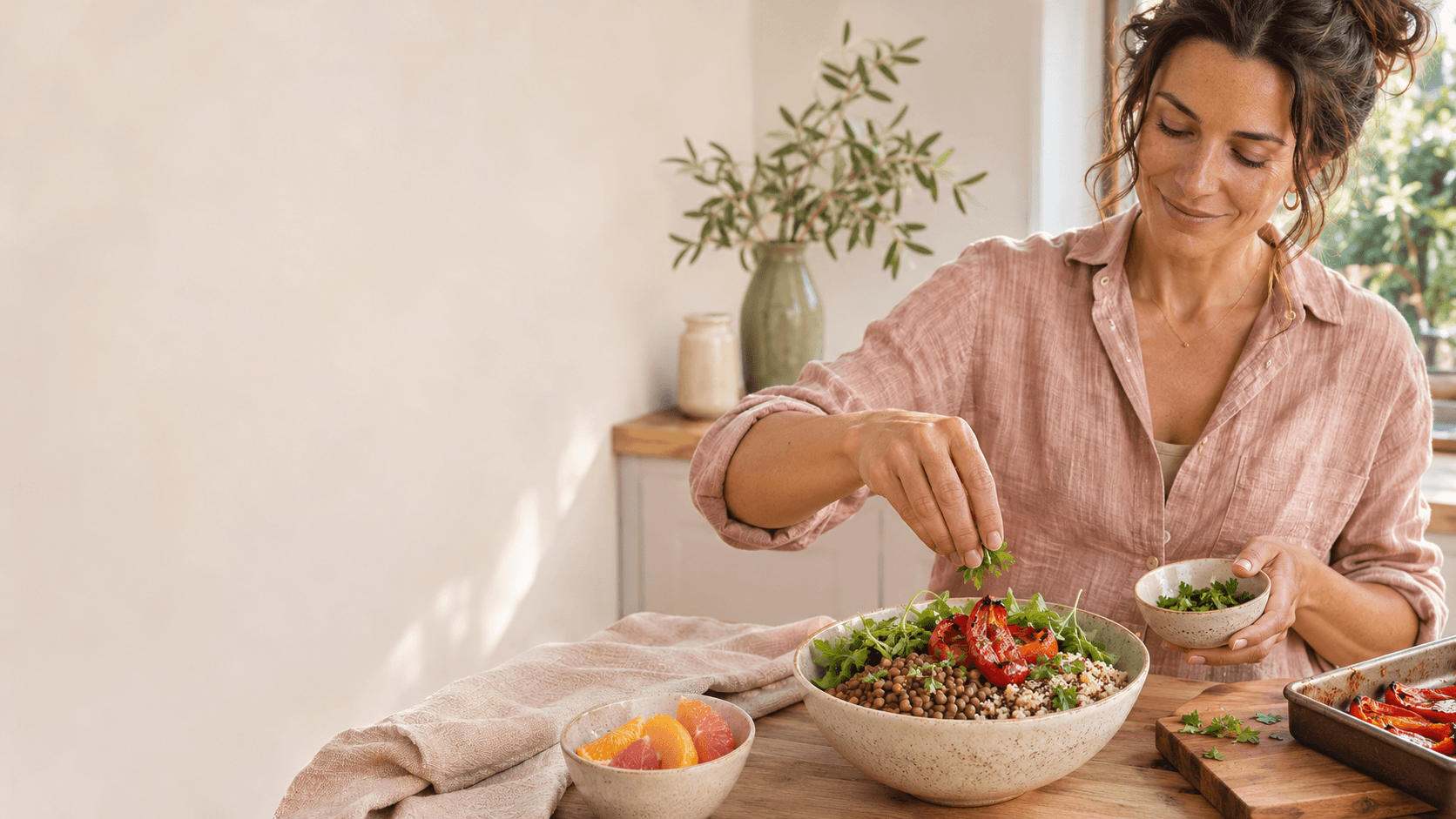
Try a lentil and roasted-pepper salad with chicken or tofu, followed by fruit; keep your usual tea or coffee for later rather than giving it up altogether.
Try this next
Choose one meal this week to make iron-aware: add an iron-containing food and a vitamin-C-rich fruit or vegetable.
Want more structure?
This article is a useful starting point. Everyday Protein: A Practical Guide for Busy Women offers a more complete framework to keep building on it.
Explore Everyday Protein: A Practical Guide for Busy Women →Sources & further reading
- [1] National Institutes of Health, Office of Dietary Supplements. Iron: Health Professional Fact Sheet. ↗
- [2] NHS. Vitamins and minerals: Iron. ↗
- [3] National Institutes of Health, Office of Dietary Supplements. Iron: Consumer Fact Sheet. ↗
- [4] Scientific Advisory Committee on Nutrition. Iron and Health Report. ↗
- [5] NHS. Iron deficiency anaemia. ↗