The short answer
Add fibre gradually using foods you already like: fruit, vegetables, beans, lentils, oats, wholegrain bread, nuts or seeds. Increase one or two foods at a time and drink fluids regularly. If you have a digestive condition or a clinician has advised a particular diet, follow that individualized guidance.
Add one familiar fibre source at a time
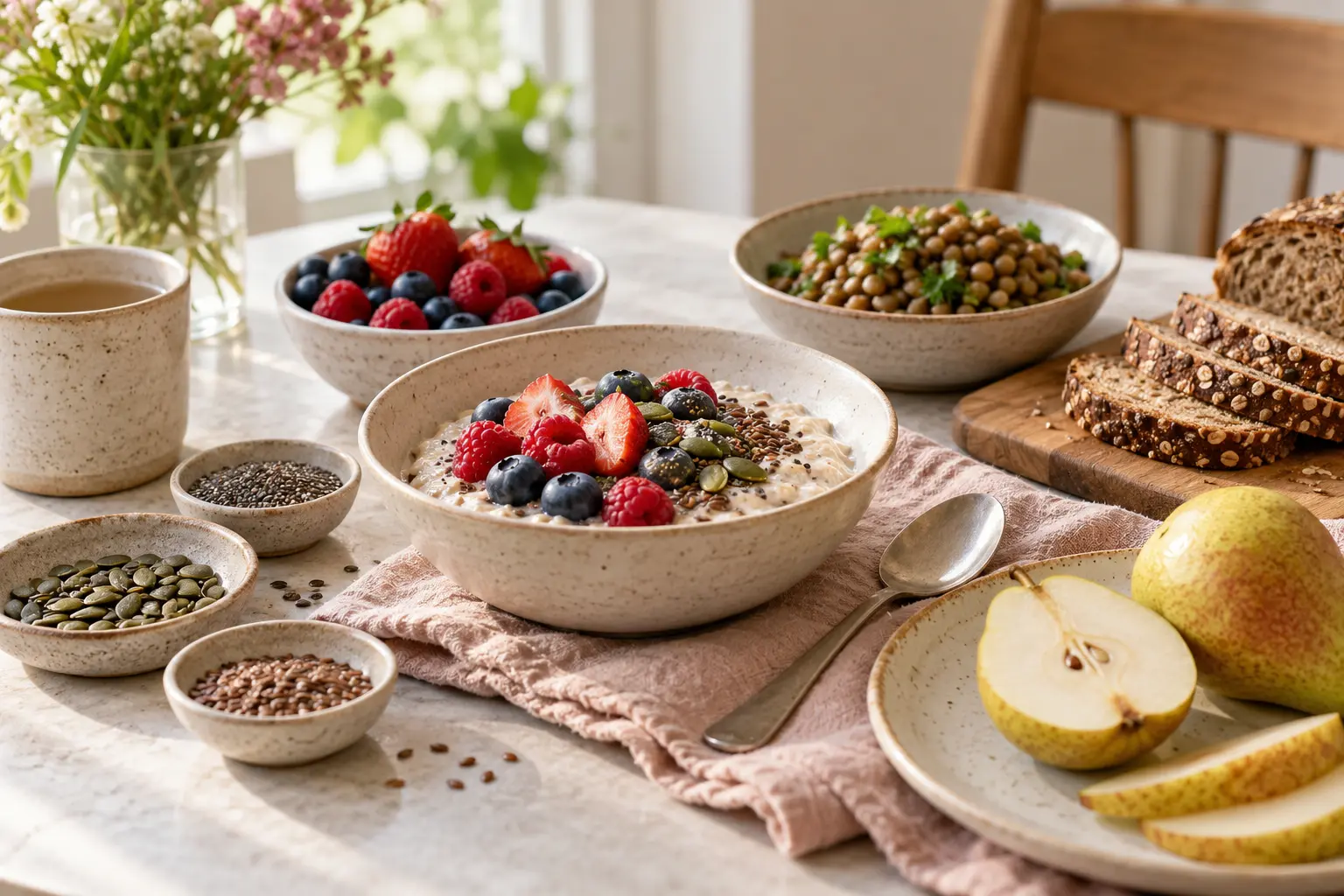
Fibre is found in foods such as beans, lentils, peas, fruit, vegetables, oats, wholegrain breads and cereals, nuts and seeds. You do not need to overhaul your menu. Add a fruit to breakfast, choose a wholegrain version of a bread you already enjoy, or stir beans into soup or a pasta sauce.
The World Health Organization recommends at least 25 grams of naturally occurring dietary fibre daily for people over age 10; UK guidance uses 30 grams for adults. These population targets are not a requirement to count every gram. Start from your usual pattern and build gradually.
Give your body time to adjust
Increasing fibre suddenly can cause gas or bloating for some people. Add one change, keep it in your routine for several days and notice how you feel before adding another. Drink fluids regularly, especially as you increase higher-fibre foods.
Fibre needs can differ with digestive conditions and clinical advice. If you have ongoing pain, significant digestive symptoms, a prescribed low-fibre diet or another medical concern, check with your clinician or dietitian before making a large change.
A practical example
Add berries to breakfast, choose a wholegrain version of a bread you already enjoy, or stir lentils into a soup. You do not need to change every meal at once.
Try this next
Choose one familiar meal and add one fibre-rich food to it this week.
Want more structure?
This article is a useful starting point. The Nourish Edit offers a more complete framework to keep building on it.
Explore The Nourish Edit →