The short answer
Meal preparation can be small and flexible. Stock a few ingredients that combine easily, prepare one component ahead or use convenient options such as frozen vegetables, canned beans and ready-cooked grains. The aim is to make a future meal easier, not to create a week of identical containers.
Prep ingredients, not an entire week
Meal prep can mean one small action that helps future-you. Wash fruit, cook a pot of rice, portion snacks, make a sauce, chop one vegetable or put a few convenient staples where you can see them. You can also rely on frozen vegetables, canned beans, prewashed greens and ready-cooked grains.
A few flexible building blocks create more options than seven identical containers. Pair a grain with beans and vegetables for a bowl, tuck leftovers into a wrap, or add a prepared protein to a salad. The goal is to make the next meal easier while leaving room for plans to change.
Let your hardest meal choose the prep
Notice when meals tend to unravel: an early breakfast, a late lunch or the hour before dinner. Prepare only for that pinch point. If you usually arrive home hungry, keeping a quick protein option, frozen vegetables and a grain on hand may be more valuable than spending a whole afternoon batch-cooking.
Store cooked foods safely, refrigerate perishable ingredients promptly and use them within an appropriate timeframe. For food safety, follow your local public-health guidance; the USDA provides storage and handling advice for home cooks.
A practical example
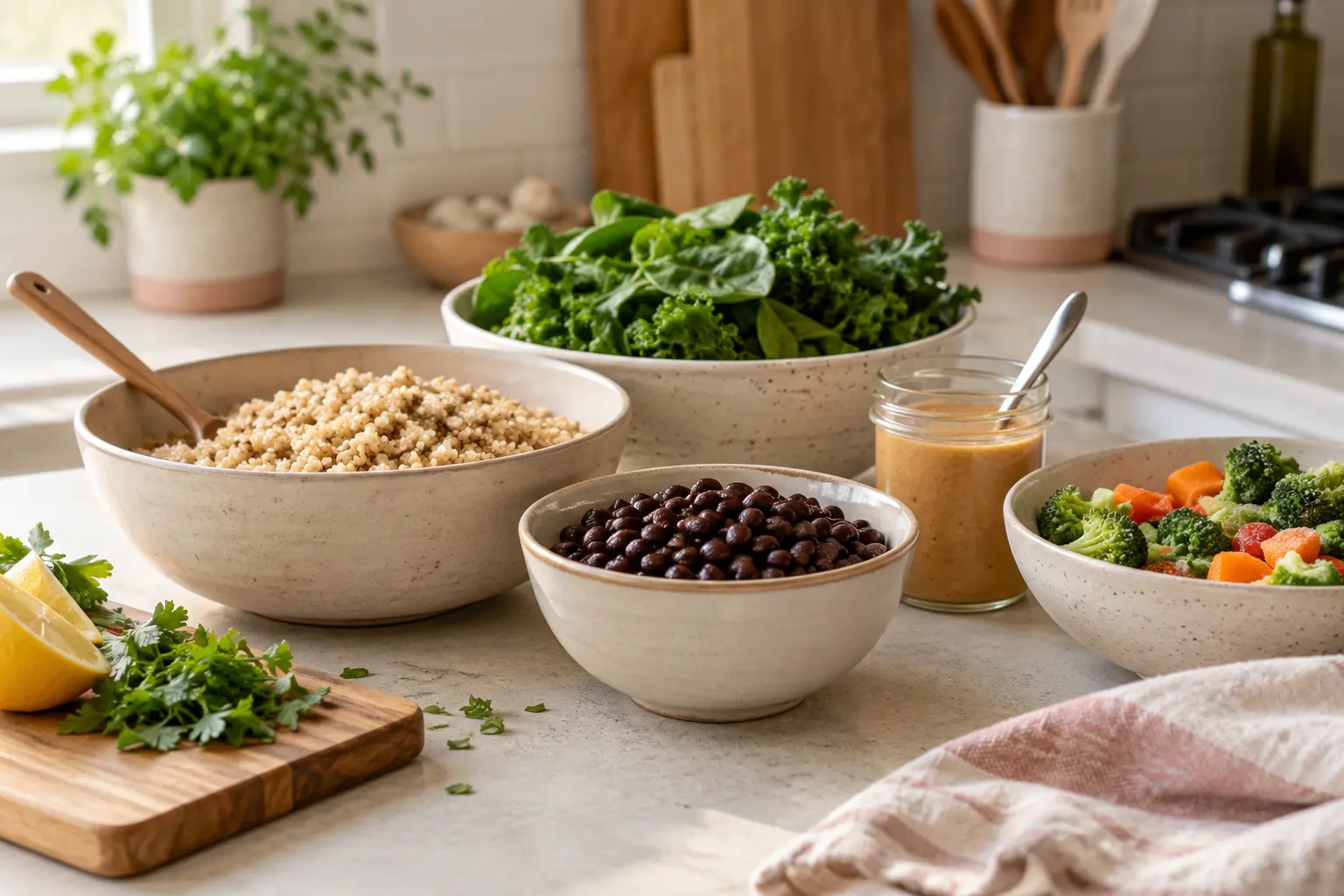
Wash fruit, cook one pot of rice, keep canned beans and frozen vegetables on hand, and prepare a sauce you like. These pieces can become a bowl, wrap or side dish in a few minutes.
Try this next
Choose one ingredient to prepare or buy in advance for the meal that usually feels hardest to organize.
Want more structure?
This article is a useful starting point. The Protein Meal Prep Edit offers a more complete framework to keep building on it.
Explore The Protein Meal Prep Edit →