The short answer
An evening routine can be brief. Choose one practical task that makes tomorrow easier and one calming activity that helps mark the end of the day. Keep the order flexible enough to survive busy evenings. A routine is a support, not a test you pass or fail.
Choose cues that serve tomorrow and tonight
An evening routine can be two small actions: one practical task that makes tomorrow easier and one calming activity that helps you slow down. Put your keys by the door, prepare a lunch component or set out clothes; then read, stretch gently, listen to quiet music or take a few comfortable breaths.
Keep the routine short enough for a normal evening. A flexible sequence is more useful than a perfect one. If you get home late, use a smaller version or skip it without trying to make up for it the next night.
Protect a regular sleep opportunity
A routine can support sleep, but it cannot guarantee it. The CDC says adults aged 18–60 should generally get at least seven hours of sleep; individual needs and health circumstances vary. A consistent bedtime and wake time can be a helpful cue, when your schedule allows.
If sleep problems persist, affect your days or come with symptoms such as loud snoring or gasping, talk with a healthcare professional. Lifestyle tips are not a substitute for assessment when something more is going on.
A practical example
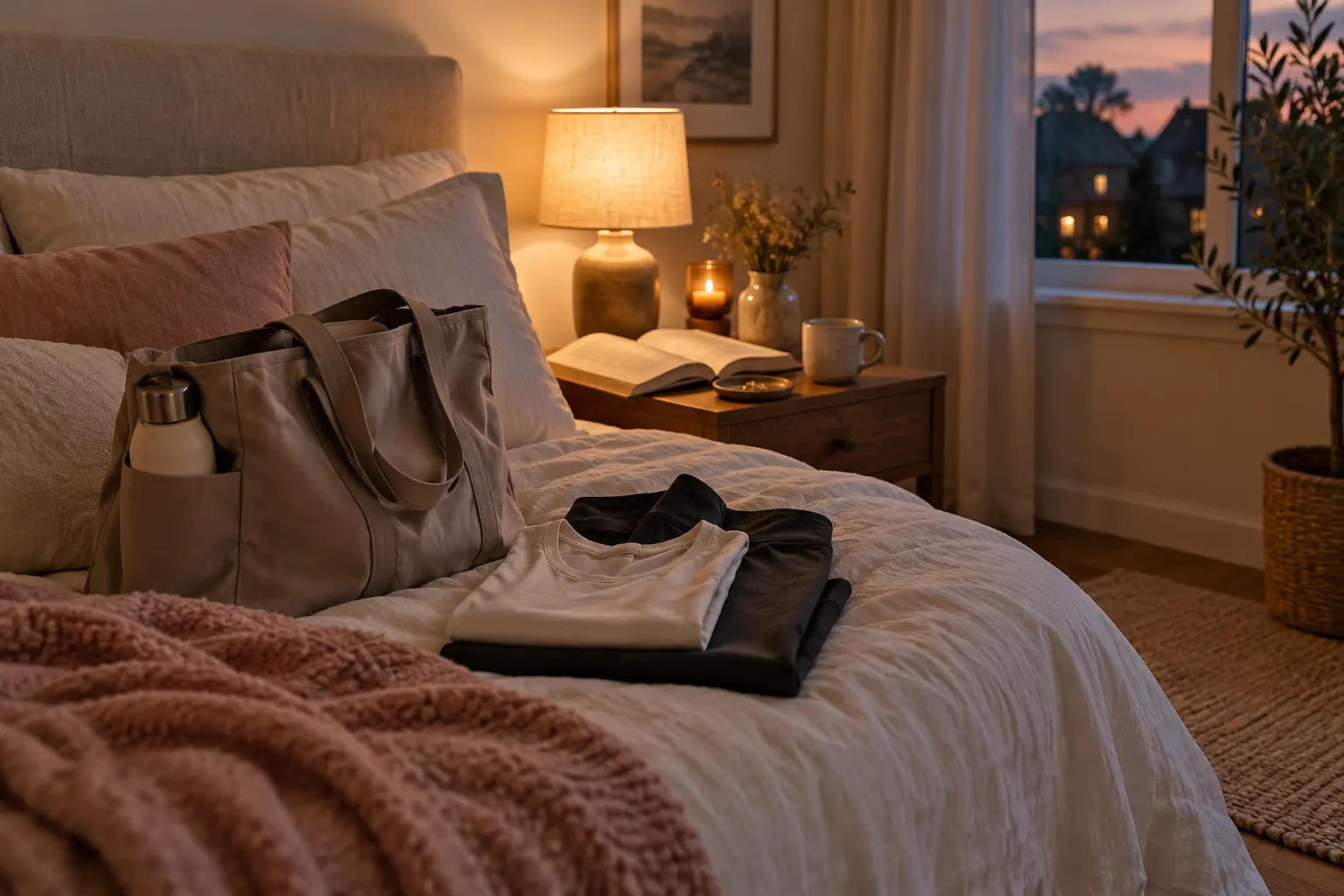
Put tomorrow’s essentials by the door, dim the lights and read a few pages. If the evening runs late, use the shorter version: prepare one item and take a few quiet minutes.
Try this next
Choose one small action to repeat at the same point in your evening for the next few days.
Want more structure?
This article is a useful starting point. The Sleep Edit offers a more complete framework to keep building on it.
Explore The Sleep Edit →