The short answer
Choose three or four exercises that cover different parts of the body, then move through them at a steady pace with enough rest to keep your technique. A short session does not need to feel rushed. Use familiar movements, prepare your equipment first and finish when the planned work is done.
Give the session a simple shape
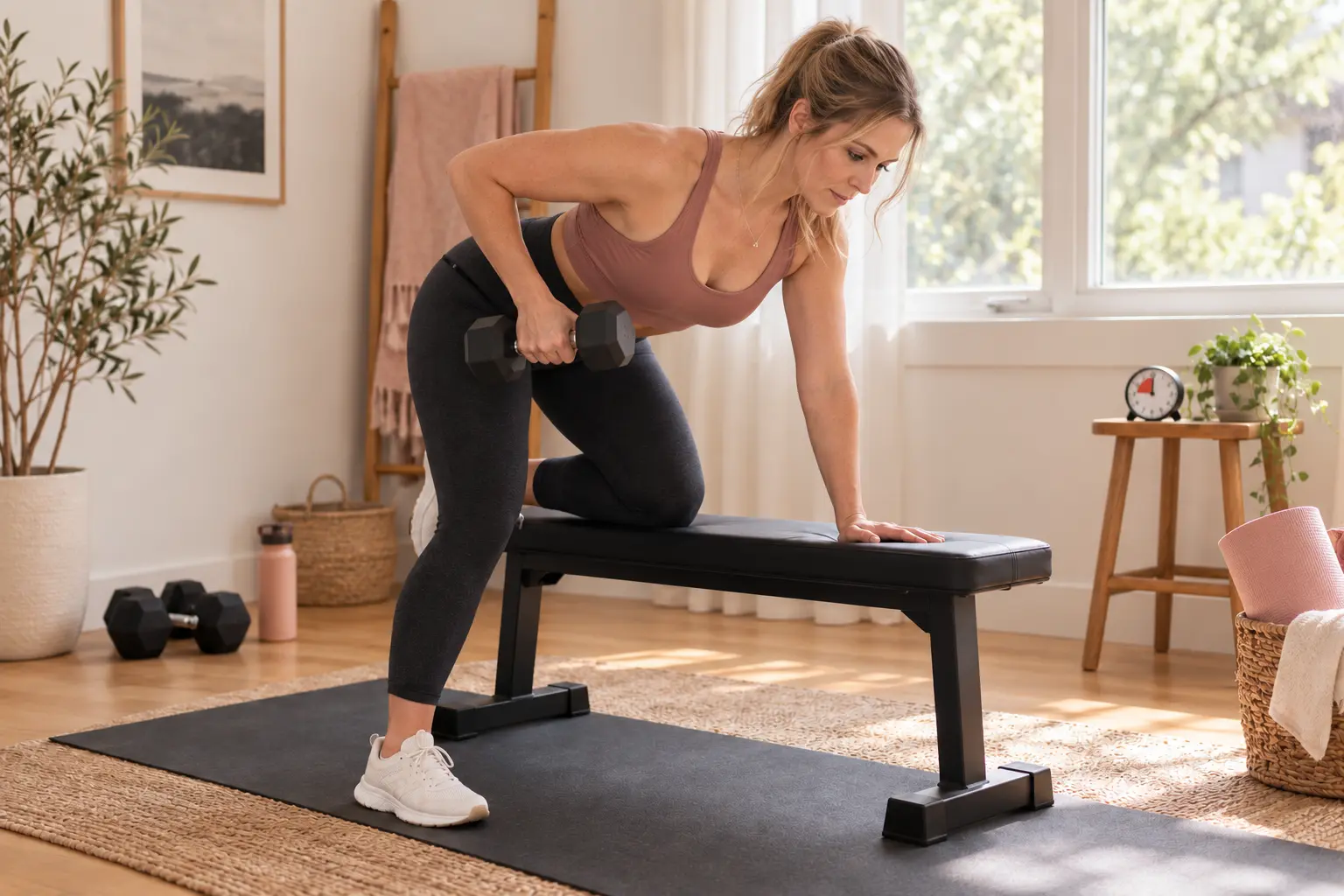
A 20-minute workout can be useful when the exercises are familiar and the transitions are quick. Spend a few minutes warming up with easy movement, then choose three or four exercises that cover different patterns—for example, a squat, a row and a floor press. Do a manageable number of sets and rest enough to keep each repetition controlled.
You can alternate two exercises while the other muscle group rests, but you do not have to race a timer. If you need more recovery, take it. A short session is still strength training when you focus on good repetitions rather than squeezing in as many movements as possible.
Prepare to make starting easier
Decide the session before the busy moment arrives. Put the weights where you can reach them, choose a clear space and write down the exercises. When time is tight, remove a set or one accessory movement instead of rushing through the main work.
A short session is one part of an active week. The CDC notes that activity can be accumulated in smaller chunks, and adults are encouraged to include muscle-strengthening work on at least two days each week. Your weekly pattern can include walks, daily movement and other activities you enjoy.
A practical example
Set a timer for 20 minutes: spend a few minutes warming up, then alternate goblet squats, dumbbell rows and floor presses for a manageable number of sets. Take brief rests and leave the last few minutes to put equipment away and note your work.
Try this next
Write down three familiar exercises before your next busy day, so you can start without planning on the spot.
Want more structure?
This article is a useful starting point. The Strength Edit offers a more complete framework to keep building on it.
Explore The Strength Edit →