The short answer
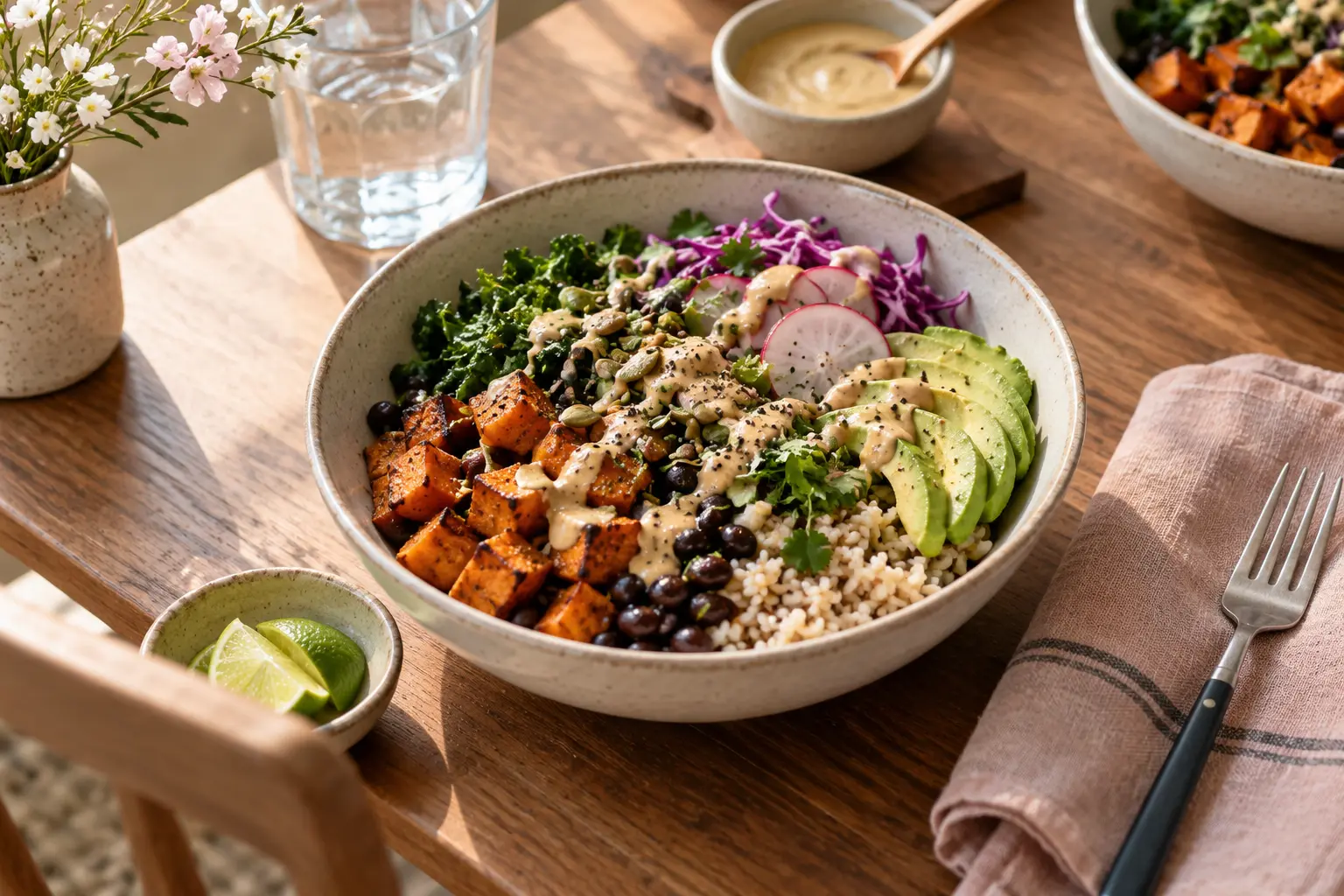
A flexible plate can include vegetables or fruit, a protein food, a carbohydrate food and a source of fat. The proportions can change with hunger, activity, food availability and the meal itself. This is a practical visual prompt, not a rule or a measurement system; mixed dishes and family meals can fit too.
Use the plate as a prompt, not a prescription
A balanced meal can include vegetables or fruit, a protein food, a carbohydrate food and a source of fat. A visual plate can help you notice variety without tracking calories, but the exact proportions are not a rule. Hunger, activity, preferences, culture, availability and health needs all affect what feels right.
Public guidance such as USDA MyPlate encourages variety across food groups. Think of that as a flexible starting point: the foods do not have to be separated, and you do not need to make every meal look like a diagram. Mixed dishes, sandwiches, soups and family recipes can all contribute.
Add for satisfaction
If a meal leaves you hungry soon after, consider whether adding a satisfying component would help: more grains or potatoes, a protein food, vegetables, olive oil, avocado, nuts, cheese or a sauce you enjoy. If the meal is pasta, for example, you can add vegetables and beans or chicken while keeping the pasta.
Nutrition advice should not make eating feel like a test. If calorie counting has been distressing or you have a history of an eating disorder, a non-tracking approach may be more supportive; a qualified clinician or dietitian can help tailor guidance.
A practical example
For a rice bowl, combine rice, chicken or beans, vegetables and a sauce you enjoy. If the meal is pasta, you can add vegetables and a protein food without needing to remove the pasta.
Try this next
At one meal this week, notice which part of the plate you could add for satisfaction or variety.
Want more structure?
This article is a useful starting point. The Nourish Edit offers a more complete framework to keep building on it.
Explore The Nourish Edit →