01ENERGY
A sustainable deficit
Fat loss requires an energy deficit — but bigger isn't automatically better. The goal is a deficit you can sustain while still functioning well.
The Fit Edit
Lose fat. Keep your muscle.
Understand the process.
A science-first guide to sustainable fat loss, muscle preservation and understanding your progress beyond the scale.
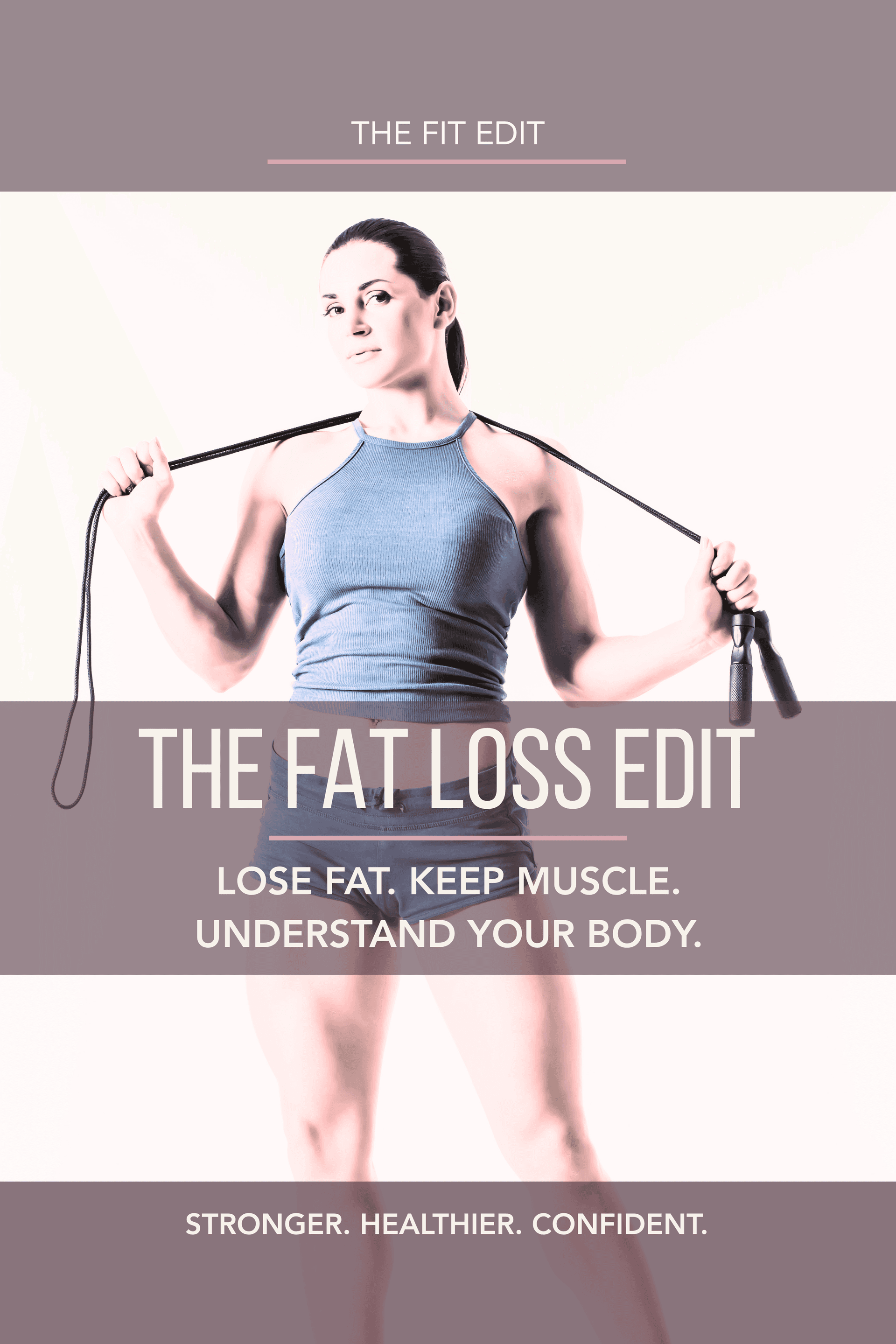
A different approach
Sustainable fat loss is about changing body composition while protecting the things that matter — muscle, performance, recovery, energy and your ability to actually live your life.
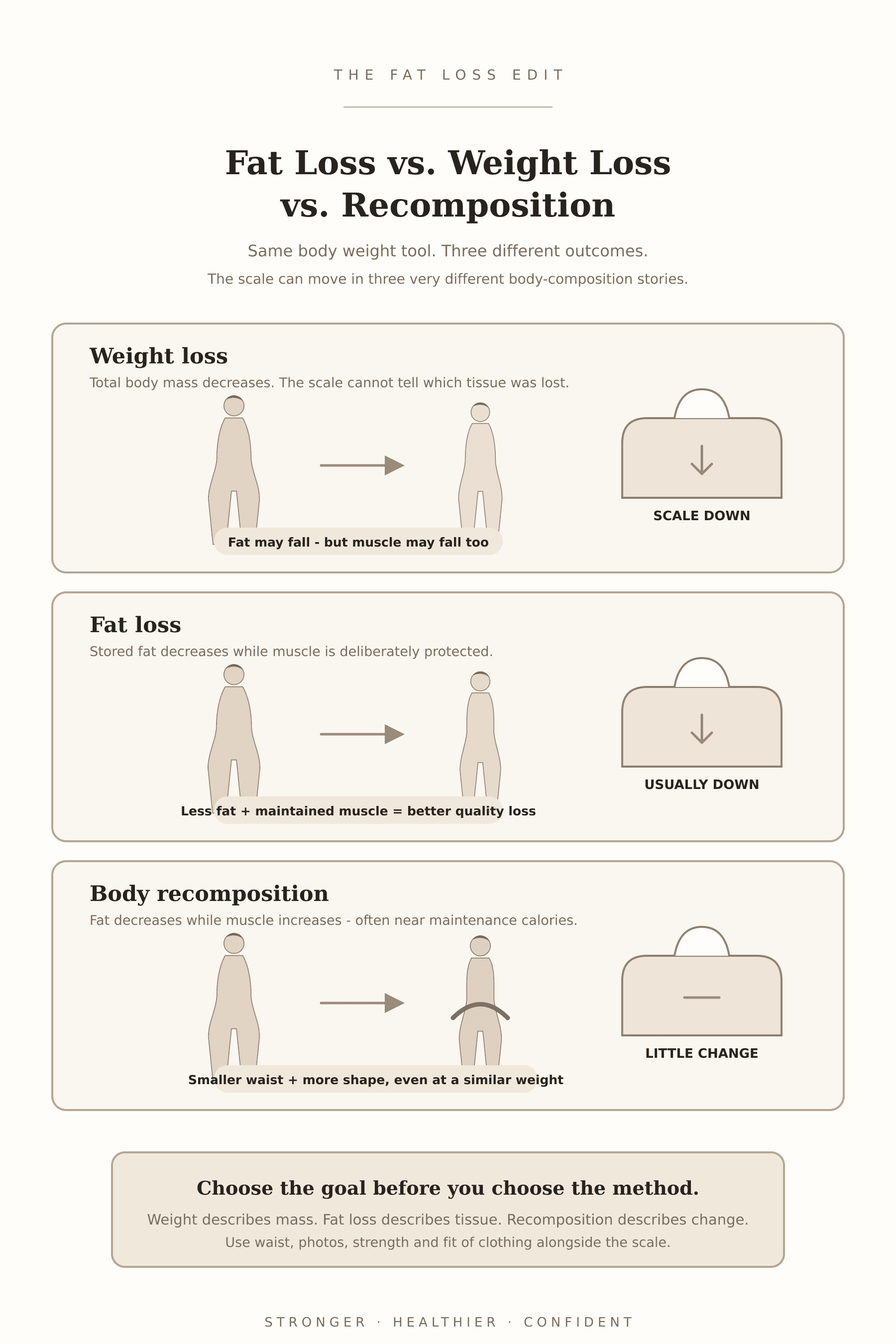
A lower number on the scale. The weight you lose may come from fat, muscle, glycogen, water — or a combination.
A reduction in body fat while preserving as much lean mass as possible. The scale matters less than what the weight represents.
Losing fat while building or maintaining muscle. Your body can change even when your scale weight changes very little.
Stop asking only, “How much weight did I lose?”
Start asking, “What is actually changing?”
The foundations
It needs the right foundations working together. The Fat Loss Edit brings the process back to what actually matters — without crash diets, endless restriction or chasing every new trend.
Fat loss requires an energy deficit — but bigger isn't automatically better. The goal is a deficit you can sustain while still functioning well.
Protein supports muscle retention, recovery and satiety while dieting — helping the weight you lose come from the right place.
Resistance training provides the signal your body needs to maintain muscle while body fat comes down.
The best plan isn't the most aggressive one. It's the one you can repeat long enough for the process to actually work.
The Fit Edit approach
Simple in principle. More nuanced in practice. The book shows you how to apply each part to your own life.
More isn't always better
A calorie deficit is part of fat loss. But pushing that deficit harder and harder can come with trade-offs. The goal is not to eat as little as possible — it is to create enough of a deficit to make progress while still supporting your body.
The question changes
Not:
“How little can I eat?”
But:
“How can I lose fat while still supporting my body?”
Signals worth noticing
One signal alone doesn't tell the whole story. Patterns and context matter.
Individual needs matter
There is no universal
“magic number.”
A calorie target only makes sense in the context of the person using it. Body size, activity, training, goals and individual energy needs all matter. A number isn't automatically “too low” or “enough” simply because it appears on a meal plan.
The Fat Loss Edit helps you look beyond arbitrary calorie rules and understand what your own progress, performance and recovery are telling you.
The goal isn't the largest possible deficit.
It's the smallest effective one.
Inside the Edit
Clear explanations, practical frameworks and visual tools help you understand not just what to do — but why it works.
Beyond the scale
Weight loss, fat loss and body recomposition are not the same thing. Understanding the difference changes how you measure progress — and what you do next.
Eat to support the goal
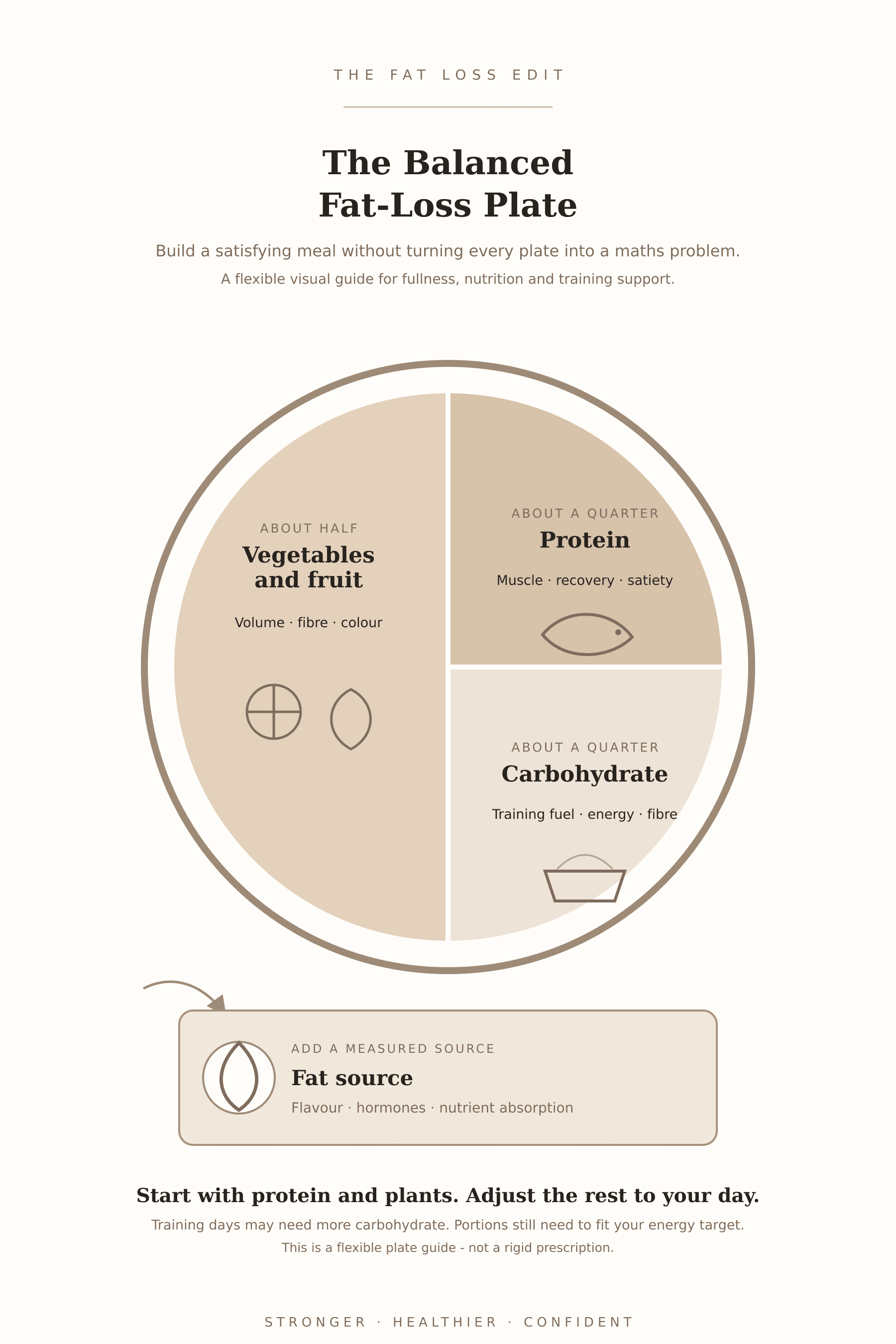
A sustainable fat-loss diet still needs to nourish you. Protein, produce, carbohydrates and dietary fats all have a place — with portions adjusted to your individual needs and goals.
Understand your progress
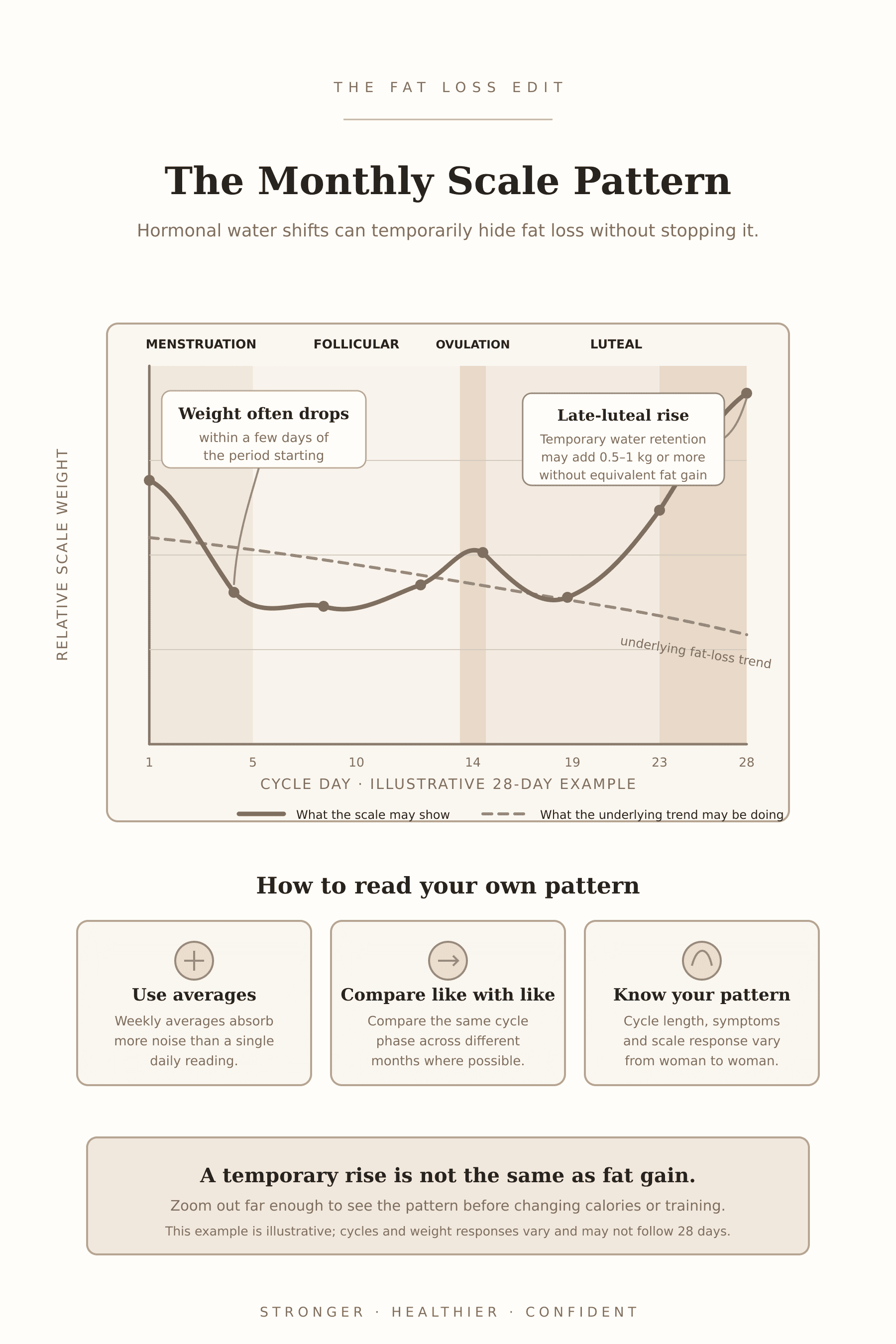
Daily and monthly weight changes can reflect far more than body fat. Learn to recognise normal fluctuations, look for trends and stop letting a single weigh-in define your progress.
Knowledge changes the process
Less guessing. Less reacting.
More informed decisions.
The Fit Edit Tool
Calories aren't a fixed prescription. Start with an estimate, understand the context and use your real-world progress to refine it.
Your details
Why a range?
Your body isn't
a calculator.
Equations can give us a useful starting point, but they cannot know your exact metabolism, spontaneous movement, training output or day-to-day energy expenditure.
We'll give you a starting range — not pretend there is one perfectly precise calorie number.
This calculator provides an estimate for educational purposes only. Individual energy needs vary. Pregnancy, breastfeeding, medical conditions, eating disorders, recovery from illness and other circumstances can substantially change nutritional needs.
The Fit Edit Check
Sometimes the next step is fat loss. Sometimes it is better sleep, more protein, stronger training or simply eating enough to support what you are asking your body to do.
Take the Fit Edit Check3 minutes · Free · Evidence-informed
Look at the bigger picture
Is your body getting the signal to stay strong?
Are you supporting your goals — or simply eating less?
Are your foundations helping or holding back the process?
Your result may point to fat loss — or to something worth addressing first.
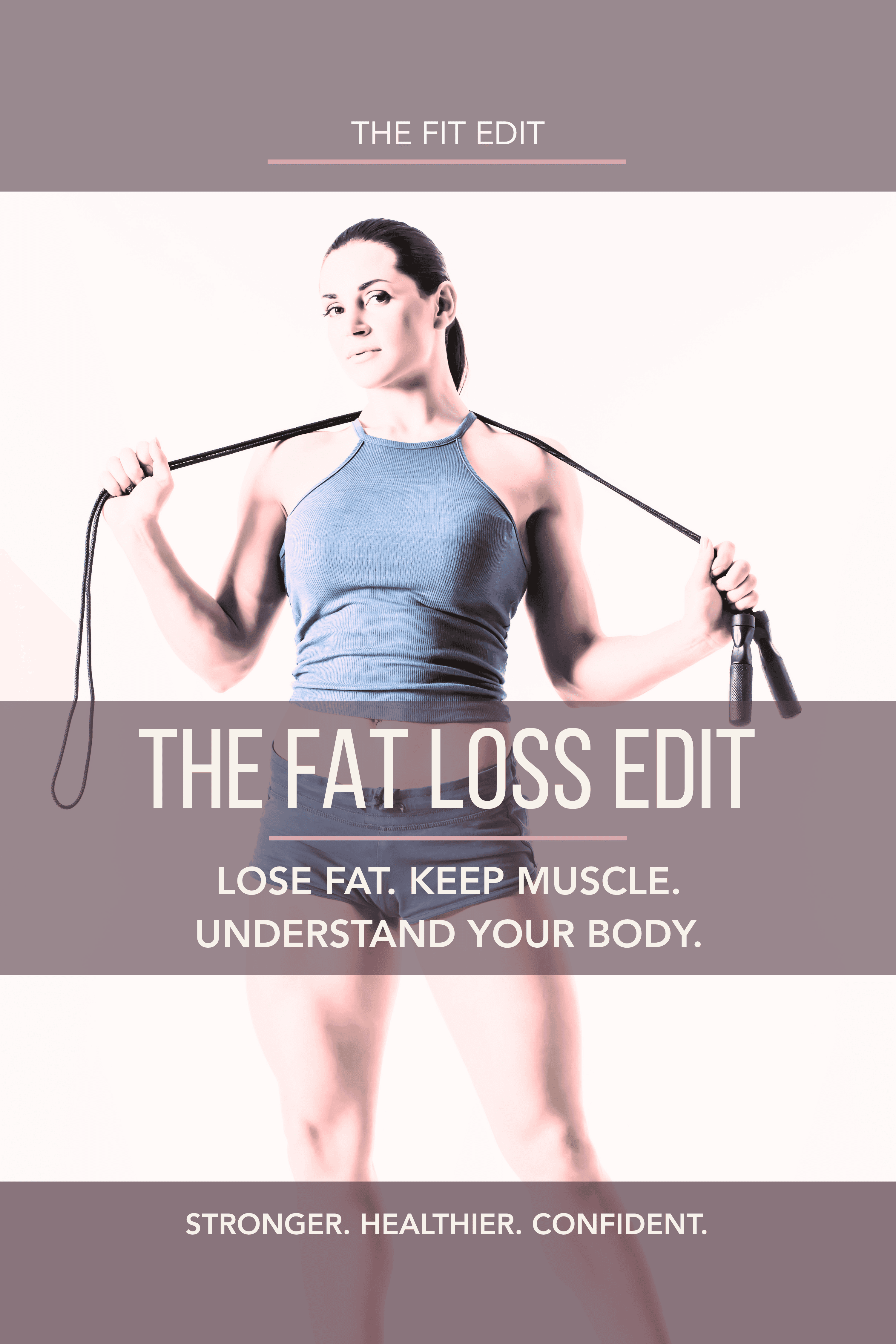
The Fat Loss Edit
A practical, science-first guide to losing body fat while protecting muscle, performance and the foundations that keep the process sustainable.
Understand calories, energy balance and your individual needs.
Build meals that support fat loss without unnecessary restriction.
Use protein and strength training to help preserve muscle.
Understand plateaus, scale fluctuations and when pushing harder may not be the answer.
Educational information only. The Fat Loss Edit is not a substitute for individual medical or nutritional care.